-
Molly Haslund (DK)
-
Sandra Kosorotova (DK)
-
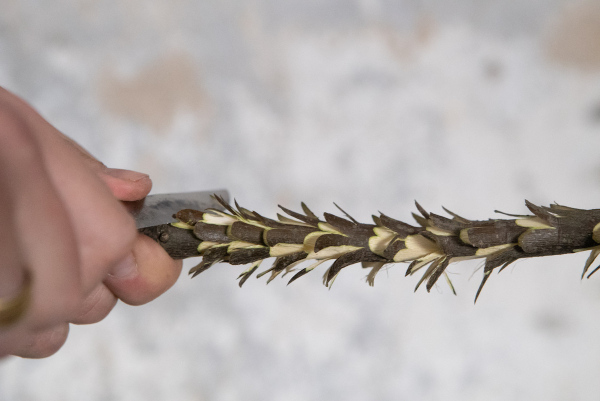 Photo: Laurynas Skeisgiela
 -
Voldemārs Johansons (LV)
-
-
Frøydis Lindén (NO)
-
Cynthia Blanchette (CA/FI)
-
Jakob Fälling (DK)
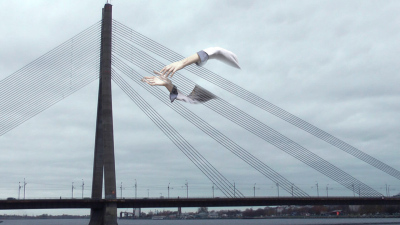
Digital technology has colonized our attention and replaced our horizon with photobombs of remote, (often fake) places. I am exploring the change of place, urbanity and landscape in a simple form of micro geography, that rests on drawing and storytelling. I believe the near physical surroundings of any individual are important personal traits, parallel to hair style, voice or clothing, and exploring a personal story also means engaging in the landscapes of this person. Drawing on site is a simple way to explore place and nature. The resulting stories can be labelled as ‘soft cartography’. I show my light art in public squares, temporarily reconquering these hardened, commercial and busy spaces, utilizing them for empathic human connection and storytelling. I employ tech tools to amplify the humanistic sensibilities in order to reverse the tech dominance just for a second.
-
Rūta Spelskytė (LT)
-
Inga Erdmane (LV)
-
Helle Siljeholm (NO)
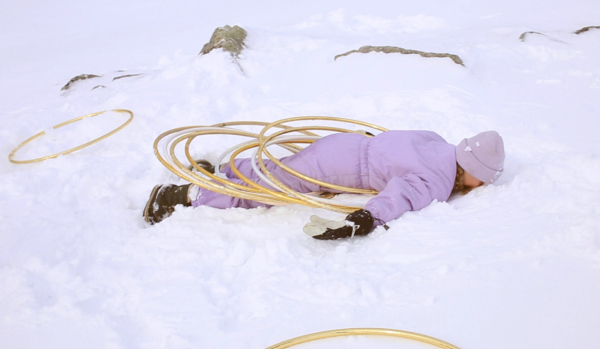
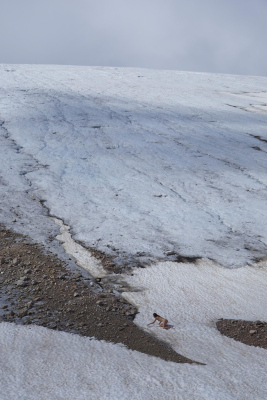
Helle Siljeholm is an artist and choreographer based in Oslo, Norway, currently pursuing a PhD at the Oslo National Academy of the Arts. Her multidisciplinary practice spans film, installation, sculpture, choreography, and performance. Her research focuses on geological entities—such as mountains and land formations—and their complex entanglements with human, natural, and cultural systems across geological time, the present moment, and possible futures. Helle’s artistic work and research are strongly influenced by a decade of collaborative artistic projects in the Middle East, particularly in Lebanon, Palestine, and Jordan.
Her work has been presented at a range of international venues and festivals, including: Kunstnernes Hus, Oslo (No), Festival 10 Sentidos (ES), Reykjavik Dance Festival (IS), Walk&Talk Biennale- Gestures of Abundance (PT), Greek Film Archive (GR), Sísmograf (ES), Biennale Gherdëina 9: Parliament of Marmots (IT), Bolzano Danza / Haydn Foundation (IT), PCAI – Polygreen Arts and Culture Initiative (GR), Landart Gjerdrum (No), The Machine Is Us (MUNCH Triennale) and MUNCH (Opening) (No), VEGA | ARTS (DK), Black Box Teater, Høstscena, Rosendal Teater, Jugendstilsenteret and KUBE, Oslo Kunstforening, BEK, Akershus Kunstsenter (No), National Gallery of Iceland (IS), Ramallah Contemporary Dance Festival (PS), Athens Biennale (GR), BIPOD – Beirut International Platform of Dance (LB), Nordic Panorama – Film and Documentary Festival (SE), Hamburger Bahnhof – Museum für Gegenwart (DE).
www.themountainbody.com
-
Pavel Rotts (FI)
-
Ann Mai Lunde Røge (DK)
-
Diana Lelonek (PL)
-
Augustas Lapinskas (LT)
-
Beāte Poikāne (LV)
-
Amanda Selinder (SE)
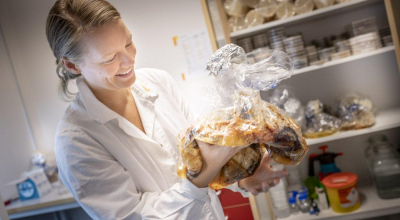
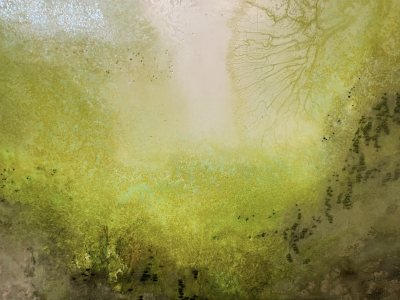
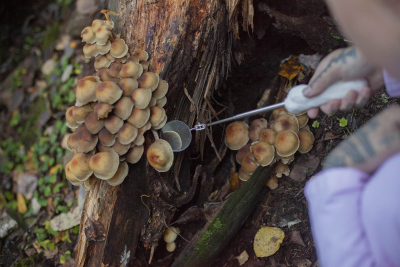
Amanda Selinder is a visual artist and biologist. Her artistic practice explores and makes visible processes unfolding around us that often remain beyond the reach of the naked eye. Through collaborative projects, frequently involving researchers, Amanda employs scientific methods from an artistic perspective. This approach allows her to ask questions from alternative viewpoints and engage with aspects of existence that do not always fit within the measurable: life itself, our interconnectedness with the living world around us, and the functions, life cycles, deaths, and conditions of other species and cells.
The point of departure in Amanda’s work is always living organisms or cells, such as human retinal cells, endophytic fungi that inhabit plant tissues, or the slime trails left behind by slime molds as they navigate their environment. Traditional biological laboratory methods are combined with digital platforms, light projections, video, textiles, and wood to reveal different rhythms and layers of stories intertwined with the human body.
-
Annike Flo (NO)
-
Kira O’Reilly (IE/FI)
-
Aurelija Maknytė (LT)
-
Linda Boļšakova (LV)
I’m a research-based, interdisciplinary artist, focusing on installation and performance. Acknowledging the vibrancy and equality of material embodiments, be they human or more-than-human, the developed work is often sculptural, but it is a sculpture that is attuned to the changing nature of things; sculpture that is, in this sense, always a performance. I work with relationality as the essential structure of being and imagine futures of more sustainable coexistence.
Co-creation and collaboration across species and disciplines is an important part of the way I work. Previously, I’ve collaborated with composers, botanists, mineralogists, breakdancers, various orchid species, biotope experts, beatboxers and web developers. I’ve worked with leading scientists from the National Botanic Garden, Institute for Environmental Solutions and Nature Foundation in Latvia, as well as the Association for the Conservation of Antalya Orchids and Biodiversity in Turkey and various individual nature experts and scientists.
I hold an MA in Performing Arts from the Iceland University of Arts (2026) and a BA in Contemporary Art Practices and Philosophy as a joint degree between the University of Dundee and Duncan of Jordanstone College of Art and Design (2016, Scotland).
-
Ingela Ihrman (SE)
-
Hege Tapio (NO)
-
Sonja Strange (DK)
-
Jenny Käll (SE)
-
Simon Daniel Tegnander Wenzel (NO)
-
Tuomas A. Laitinen (FI)
-
Sara Hagins (DK)
Sara Hagins is a visual artist born in Aalborg. She graduated in History from the University of Copenhagen (2008) and Visual Artist from the Art School Ar.Co – Centro de Arte e Comunicação Visual in Lisbon (2015). Her practice spans textile, sound, performance and participatory formats, exploring relationships between body, care and ecology in both public and institutional spaces.
-
Saulė Noreikaitė (LT)
-
Rasa Šmite & Raitis Šmits (LV)
-
Sara Helena Cecilia Söderberg (SE)
-
Veslemøy Lilleengen (NO)
-
Timo Kokko (FI)
-
Maria Viftrup (DK)
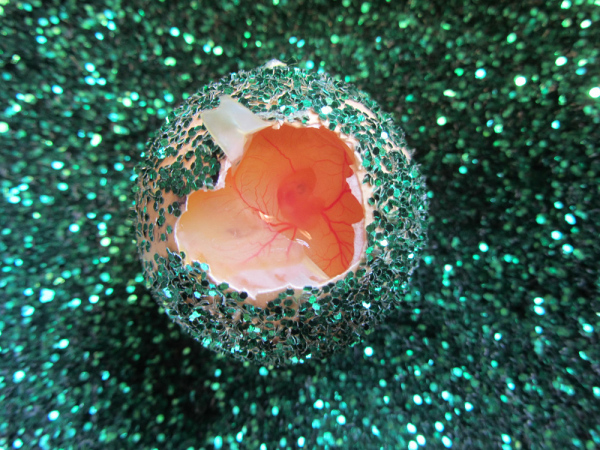
Maria Viftrup (DK b.1993) is working with care for the unvalued, the dusty, the smallest, and the sensuous. Her mixes visual art, performance and experimental design. She facilitates meetings between humans and matter. Her practice often includes other people into experiments, which is a way of challenging her own artistic control and creating a generous space for dialogues between artist, viewer and matter. Her colorful, sensuous universe invites into care and curiosity about themes such as other-than-human worlds, ecosystems, resources, waste and value.
-
Andris Eglītis (LV)
-
Åsa Elzén (SE)
-
Silje Figenschou Thoresen (NO)
-
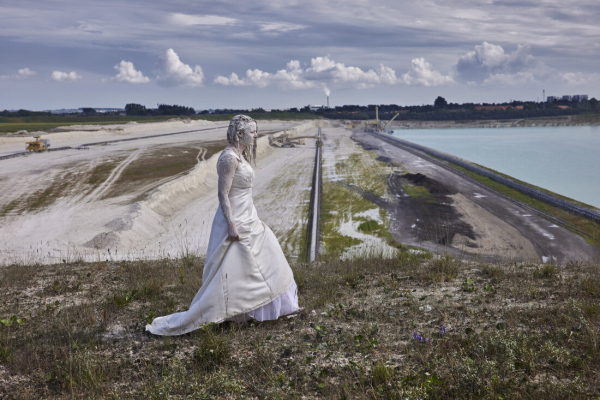
Nana Francisca Schottländer (DK)
I work cross-aesthetically within the fields of choreography, performance, video and installation using the body as a living instrument for encounters, research and co-creation. The works revolve around encounters and intra-actions between humans and more-than-human bodies and worlds including rocks, fungi and plants, wind, waters and tides, soil types and larger geographical areas.
Since 2020 I focus on landscapes shapes by human intervention like extraction, production, waste and infrastructure to explore, what care and reciprocity looks like here. The works employ immersion, co-creation and long duration and draw inspiration from both scientific and academic research to develop embodied knowledge and encounters of reciprocity and co-creation.
My work formats includ performances (both participatory and solo, site specific and in art spaces), sound and video installations, exhibitions, writings and publications.
Previous performances and exhibitions (selection): Metropolis (DK), OIT (NO), Louisiana Museum of Modern Art (DK), Kunsthal Charlottenborg (DK), Roskilde Festival (DK), Heartland Festival (DK), KØS Museum (DK), The Danish National Gallery (DK), Festival of Future Nows / Hamburger Bahnhof (DE), Pergine Festival (IT), Breath Days (IT), Art Center Silkeborg Bad (DK) Liselund (DK), The Tunnelfactory (DK) amongst others. -
Malin Arnell (SE/DE)
-
Jenna Sutela (FI/DE)
-
Piste Kollektiivi (FI)
-
BEYOND DARKNESS (DK)
-
Lada Suomenrinne (NO)
-
Alma Heikkilä (FI)
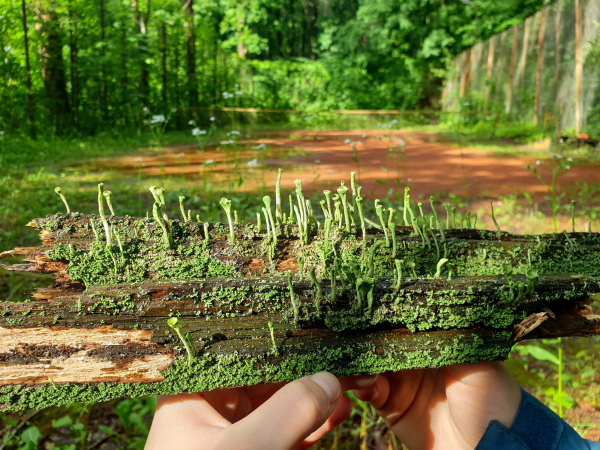
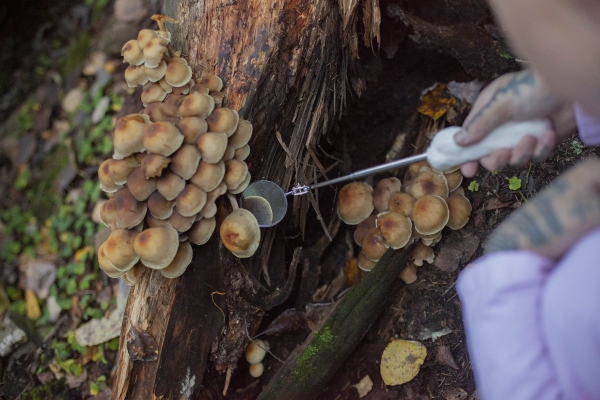
Alma Heikkilä is a visual artist based in Helsinki Finland "I observe what is visible on decaying wood, beneath stones or nails, and on my phone screen. I’m browsing the internet for articles and images of other species. I look at pictures taken through other people's microscopes and check the dictionary. I create images and sculptures in collaboration with materials such as water, pigments, binders, and gypsum. I watch the formation of the artworks with curiosity.I am my own body, observing it in bewilderment. I expend energy, consume products, microbes digest rye bread, and my skin is warm. I try to align my thoughts and work with an era in which I systemically overconsume my environment alongside others. Time spent with the Mustarinda group and the Paljakka forests has had an invaluable impact on my artistic practice.”
-
Georg Jagunov (BY/DK)
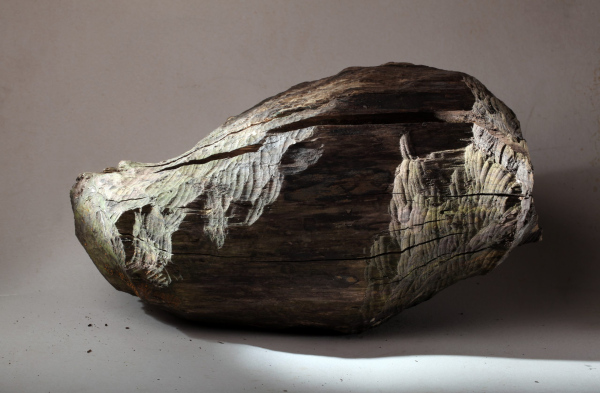
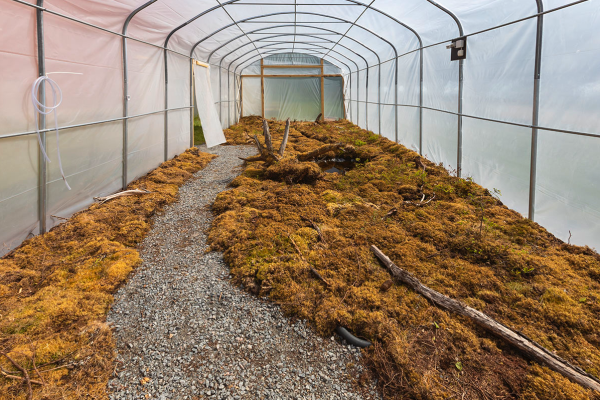
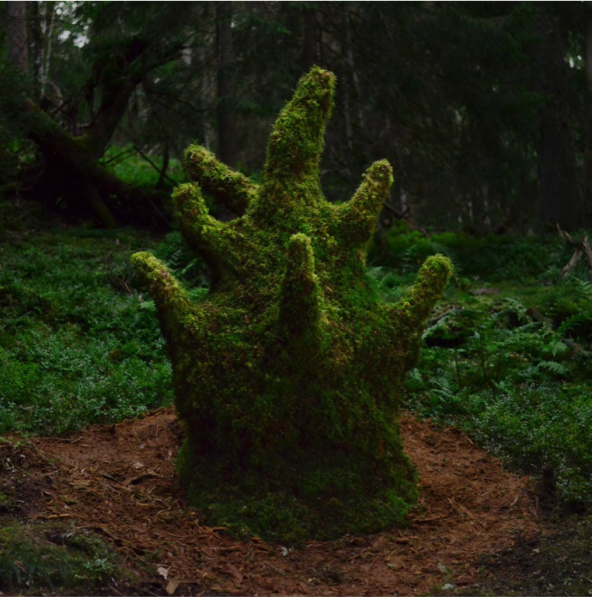
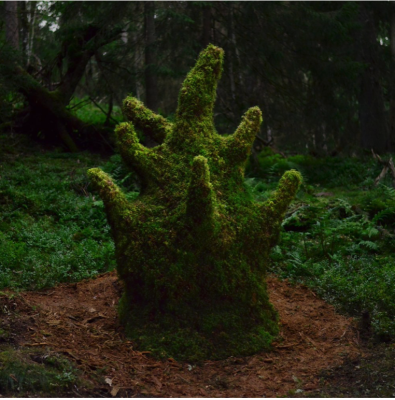
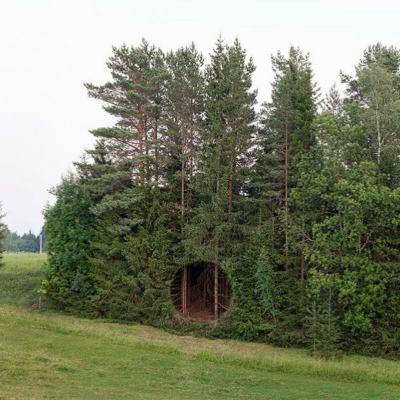
Georg Jagunov (b. 1984) is a Danish-Belarusian visual artist based in Copenhagen. He graduated from the Royal Danish Academy of Fine Arts in 2011 and works across installation, sculpture, digital animation, sound, projection, and performance. His practice moves at the intersection of nature, geology, and the human imagination. Through sensory and spatial formats, he explores deep time, geological processes, cultural heritage, and the hidden narratives of materials. Drawing on organic and geological structures, he creates works that connect the microscopic with the landscape, and the material with the mythological. In recent years, he has worked particularly with moss, flint, water, afforestation, and ancient landscapes across different scales and contexts. Jagunov frequently develops interdisciplinary projects with architects, researchers, educators, and cultural institutions.
-
Jenny Berntsson (SE)
-
Ingrid Elsa Maria Ogenstedt (NO)
-
Studio Kalleinen (FI)
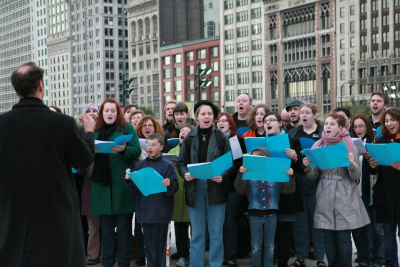
Tellervo Kalleinen is a Helsinki-based artist and songwriter whose projects spark creative processes and generate temporary communities. Her conceptually driven participatory practice takes diverse forms, from moving image works to performance. She embraces absurdity as fertile ground for unexpected perspectives and unlikely encounters. For her, performance is a means of creating improbable situations between performer and audience, such as Recycle You, in which she recycles audience members’ outdated opinions.
Kalleinen has been one half of the artist duo with Oliver Kochta-Kalleinen since 2002. Their Complaints Choir project has been realised in nearly 200 cities worldwide. Alongside moving image works such as The Making of Utopia, People in White and Archipelago Science Fiction, they have realised several public art commissions. Their most recent work is The Most Valuable Clock in the World as part of Oulu2026, the European Capital of Culture. The large wind-up mechanical-electronic marvel displays valuable everyday moments donated by locals, framed by slow moments from local nature – phenomena, species and habitat types that are vulnerable to climate change or otherwise under threat.
-
Thomas Seest (DK)
Thomas Seest has been working with landscapes and natural materials. At Vild Park in the municipal Guldborgsund he has worked in collective formats and collaborations. He holds a PDC in permaculture and insists on regenerating nature and culture through his works - Art can make the sun rise and the earth quake.
-
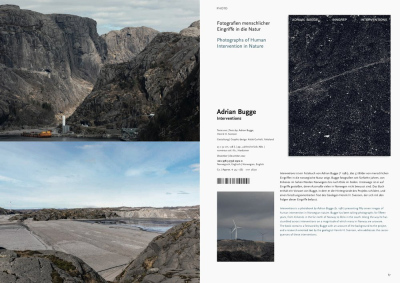
Adrian Bugge (NO)
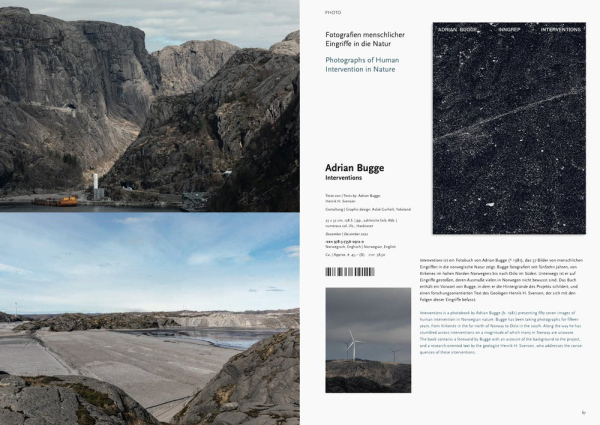
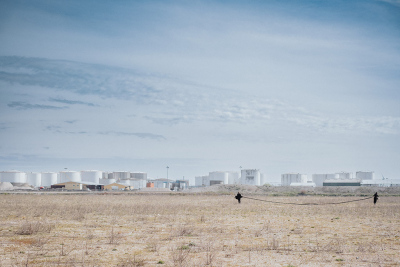
I am a Norwegian artist living both in Oslo, Norway and in Lund, Sweden. Since my debut at Høstutstillingen (Norways annual art exhibition at the Kunstnernes Hus in Oslo) in 2006, I have worked with photographic investigations of natural interventions, cities and cultural monuments. I have published the books “Nattskift”, “Den nye byen”, “Y. Bygget som forsvant” and “Inngrep” and have had solo exhibitions at Galleri Boa, Fotografiens hus, Velferden Sokndals Scene for Samtidskunst and Kunstgarasjen, among others.
A common thread in my artistry is interventions in stone. Whether they are images of mines where minerals are extracted or buildings where minerals are used in new forms (such as concrete, glass and metal), they are part of a man-made cycle that annually moves more stone than natural erosion by rivers, ocean currents, wind and glaciers combined. New buildings and the demolition of previous buildings are part of this modern geology.
-
Miradonna Sirka (FI)
-
Emma Fält (FI)
Emma Fält is a multidisciplinary artist working with drawing, installation, performing arts, and participatory practices. Their main interests are in live acts, contact and togetherness. Fält is inspired by the body, its boundaries, and possibilities to connect. Fält is exploring the trace we leave and seeks to expand and stretch the understanding of drawing and the ways to present it.
"For me, drawing is a multidisciplinary way of doing things. It is not directly related to visuality, but above all, it is corporeality. It creates a possibility to study the experience and thinking processes through the trace. My practice focuses on soundscapes, dialogue and the relation between traces and matter. I understand drawing as a way of being, a journey of finding one’s voice, an intimate, wordless dialogue, and a manifestation of presence. Doing it together can allow strangers to experience connection and share space. Drawing touches from a distance."
-
Mia Tamme (EE)
-
Cecylia Malik (PL)
-
Sanna Kannisto (FI)
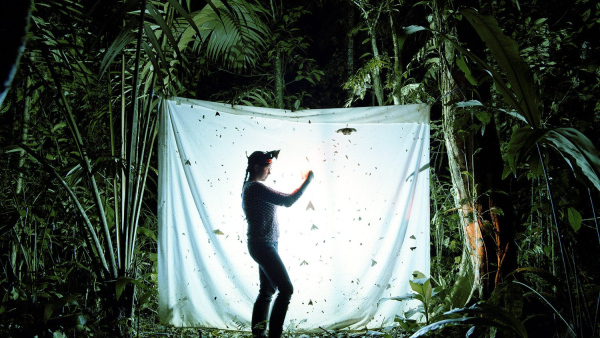
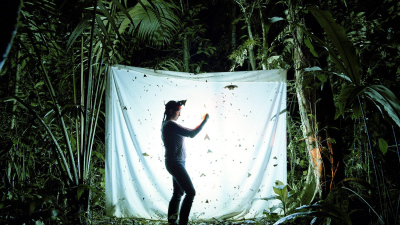
Sanna Kannisto graduated from the Aalto University in 2002. Her work merges personal narrative with photography’s documentary tradition, exploring the intersection of science and art. Through her lens, she examines both natural phenomena and her own role as observer and interpreter. Kannisto has worked in rainforests South America and lately ornithological stations across Finland and Europe. Her carefully staged images, influenced by scientific illustration and still life, depict rarely seen species with theatrical precision—highlighting both the beauty of nature and the artifice of presentation. A key element of her practice is close collaboration with scientists and researchers.
-
Antti Laitinen (FI)
-
Sidsel Bonde (DK)
-
Ida Raselli (DK)
-
Rune Fjord (DK)
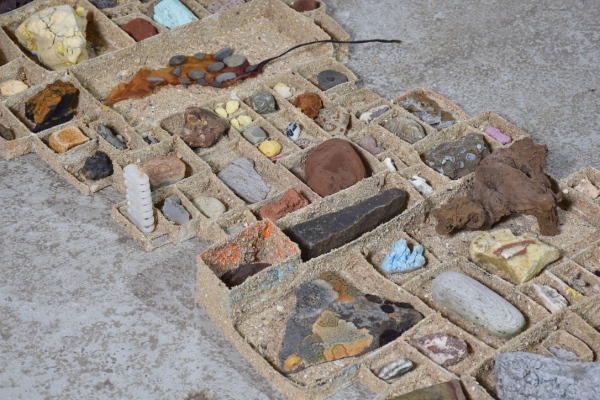
Rune Fjord is captivated by the aesthetic, sensory language as a connection between people and nature. Working with art is a way to understand the world. Wonder in the accumulation of materials and objects from nature. Works that emerge in the gaps between contexts, systems, and perspectives on the world—between science, cultural history, and spiritual language. Immersion in the creative process, the scent, the sound, the silence, the feeling, the image, the story. The conversation beside the small child, with hands, body, and words closely connected.Connection between people, body, nature, light, and darkness. His practice involves material exploration in the field between object and time-based art, and open, experimental laboratory formats where the dynamics between collecting, processing, showcasing, and archiving is central.
Studio location where he holds exhibitions annually!
-
Dainis Pundurs (LV)
-
Recover Laboratory (FI)
Recover Laboratory (RecLab) is a Finnish multi-art collective based in Helsinki whose surrealistic works and art experiences vary from obscure performance art pieces to immersive art productions. In RecLab’s works, moments stretch and stop as glitches, where anything can happen – just like on an ordinary day. One of the pioneers of Finnish immersive art, Recover Laboratory is led by two artistic directors; contemporary circus artist Miradonna Sirkka and visual artist Sofi Häkkinen; along with the executive director and experience designer Inna Huttunen. The collective’s artistic thinking is based on contact between people, honesty, queerness and a certain freedom provided by art. RecLab’s repertoire is divided into 3 segments: CORE works represent the artistic research and practice of RecLab’s ADs – the deep end of performance art, and a testing ground for new practices and ideas. AVEC consists of carefully curated co-production works that are independent and supported by RecLab. MORE entails all the other stuff the collective does, ranging from workshops and talks, to publications and residencies in the group’s working space in Helsinki. At the core of the group's expertise are participatory and immersive artworks, with key themes of interpersonal encounters, the feeling of being seen and heard, and the weird surrealism of the mundane. RecLab works extensively with developing more responsible practices in the arts field and was awarded in 2024 with a Maineteko award for its extensive work in advancing equality and new modes of operating in the performing arts. In their artistic work RecLab explores and creates alternative ways or being in and seeing the world, taking in account also the other species living with us on this planet – treating the world we all share with tenderness.
-
Lina Lapelytė (LT)
-
Agnieszka Wolodzko (PL)
I am a Polish visual artist, who uses different forms of expression. Recently, I most often create actions, collaborative workshops, installations, site-specific projects, and projects in public spaces. I am interested in a creative tension that arises on a border of a problem that I find worthy of engagement and the question of a proper and interesting aesthetic form, in which I would like to present my reflections. Using a variety of media, I do not try to become a 'specialist' in any of them. My projects are most often research-based and relate to a specific issue or a specific place. I am an extrovert rather than an introvert. Topics that interest me are public space and public sphere, urban space/habitat, the relationship between culture and nature, and possible scenarios for the future of our planet and mankind. I like collaborating with other artists and representatives from other fields. I am a person with many hats. Apart from creating visual art, I am a curator of exhibitions, and I write texts about contemporary culture.
-
Elin Sundström (SE)
-
Paula Zvane (LV)
-
Mariliis Rebane (EE)
Mari-Liis Rebane is a sound artist and visual artist working across experimental sound practices, installation, and visual media. Her work explores the perception of sound as a spatial and material phenomenon, often focusing on the intersections between listening, environment, and embodied experience.
In her practice, sound functions both as subject and medium, shaping environments that invite attentive and slowed-down modes of perception. She is interested in how sonic and visual layers interact, and how subtle acoustic and visual elements can reveal hidden structures within natural and constructed landscapes.
Rebane’s work often engages with field recordings, spatial sound composition, and site-responsive installation formats. By translating ecological and atmospheric processes into auditory and visual experiences, she creates works that reflect on human and non-human entanglements, memory, and the shifting boundaries between inner and outer landscapes.
Through her interdisciplinary approach, she seeks to expand the ways we perceive and relate to environments, foregrounding listening as a critical and embodied method for understanding contemporary ecological and spatial conditions. -
Katrīna Neiburga (LV)
Katrīna Neiburga is a Latvian artist in whose practice landscape and the material world are not a backdrop but a participant. In works created over more than twenty years, she works with found objects and seasonal rituals, observing how place and matter hold memory. Melting, decaying and earth-bound materials become a way of listening to the more-than-human world and of slowing the gaze towards what is alive around us. -
Aistė Ambrazevičiūtė (LT)
Aistė Ambrazevičiūtė is a digital artist and experimental architect based in Kaunas, Lithuania. Her interdisciplinary practice explores the intersection of digital and natural realities, creating innovative visualizations that uncover the intricate- and often invisible- relationships between environments, textures, and forms. Her work emphasizes sustainability and the symbiosis between human-made and ecological systems.
In December 2024, Ambrazevičiūtė defended her practice-based PhD at the Vilnius Academy of Arts with a research project titled Lichen Grammar, investigating the spatial and material relationships between lichen growth forms and their habitats.
Her ongoing artistic research develops architectonic surfaces inspired by diverse microecologies, furthering her interest in the multisensory and textural dimensions of natural environments.
-
Rihards Vītols (LV)
My artistic practice is about relationships between nature, technology, and science. For the first time nature in my works was shown in 2011 in an experimental photography series Recycled Nature. Since then, I have continued to work with these themes related to nature and moved to work directly in nature, not only reflecting on it. I have noticed that my work has sometimes been considered to be about ecology. For me, my work is not about ecology. It is about our relationships with nature, environment, and technology after introducing nature to my work by augmenting some aspects of an environment. This symbiosis allows me to observe what is happening when the environment meets a foreign body. Not only do I use science to support the concept of my works, but also I am trying to use scientific methods to conduct experiments and document and visualize their outcomes of them. I see my role as a mediator between my work and the environment. It is important for me not to interfere with my work, while it is in its designated environment. I am driven by unknown results and wish to find something new. At the same time, I am enjoying the process of my experiments while performing them. -
Annelie Stokke Grimwade (SE)
Annelie Stokke Grimwade is a Swedish Sámi-British artist based between Copenhagen and Oslo. She works across sculpture, writing and performance, transforming gathered and upcycled materials through ceramic processes into speculative artefacts, installations and participatory situations. Her practice is an active engagement with landscape, memory and more-than-human relations, often beginning with materials marked by ecological, historical and social forces. Informed by Sámi ways of knowing, animist thought, archaeology and feminist ecology, Grimwade’s work asks what the living world might teach us about relation, responsibility and the imagining of more thriving futures.
-
Amalie Risom Nyrup (DK)
Amalie Risom Nyrup is a visual artist working from an interdisciplinary perspective. In her artistic practice, she explores the cross-aesthetic potential of art, expressed through works grounded in nature philosophy and shaped across a variety of media. Through site-specific fieldwork and ecocentric textile techniques, she explores the aesthetics and ethics of our environmental relations.