-
Thomas Seest (DK)
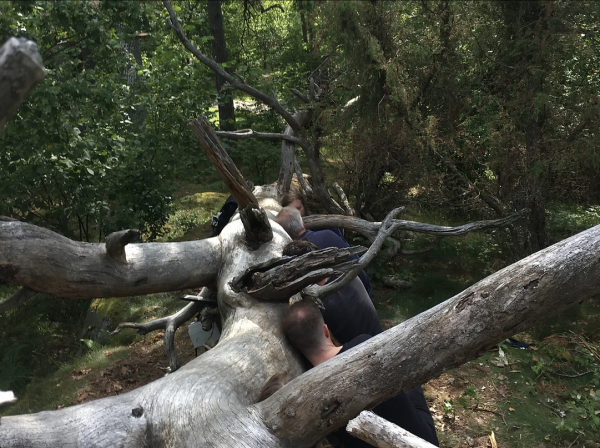
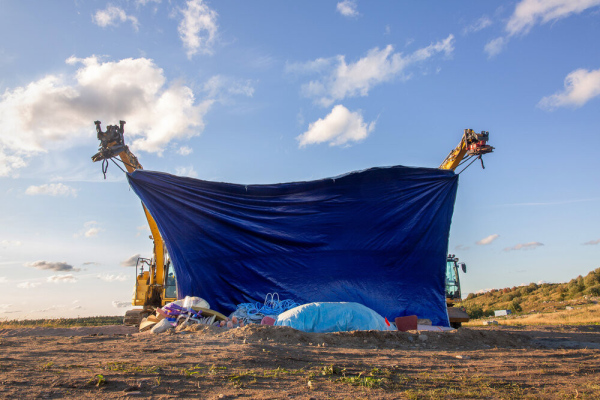
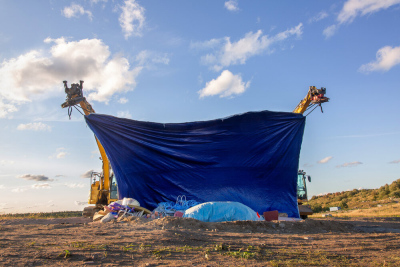
Thomas Seest has been working with landscapes and natural materials. At Vild Park in the municipal Guldborgsund he has worked in collective formats and collaborations. He holds a PDC in permaculture and insists on regenerating nature and culture through his works - Art can make the sun rise and the earth quake.
-
Lina Lapelytė (LT)
-
Krista Burāne (LV)
Krista Burāne, armed with master’s degrees in philosophy (Univesity of Latvia) and audiovisual arts (Academy of Culture of Latvia), fosters a space for dialogue not just between humans but also between humans and other beings. As an advocate for documentary, participatory and site-specific theatrical formats, Krista passionately believes in the capacity of art not only to engage viewers intellectually and emotionally and involve them physically and actively. Through her work, she aims to cultivate empathy and foster a conscientious and compassionate attitude toward all living beings and the environment. Particularly in recent times, her creative endeavours have revolved around themes of biodiversity preservation and environmental advocacy, reflecting her commitment to reshaping the dynamics of human-nature relationships. Her recent performances, including “Nocturne” (2019), “2020 Steps” (2020), “..trees Have Stopped Talking Since Then” (2020), “The End of the World and Other Nonsense” (2021), and “All Birds Sing Beautifully” (2023), serve as profound mirrors to our anthropocentric lifestyle. These thought-provoking works serve as poignant reminders of the repercussions of humanity’s myopic relationship with nature, beckoning audiences to reassess their roles in preserving the ecosystem’s delicate balance.
-
Åsa Elzén (SE)
-
Lars Holdhus (NO)
-
Fern Orchestra (FI)
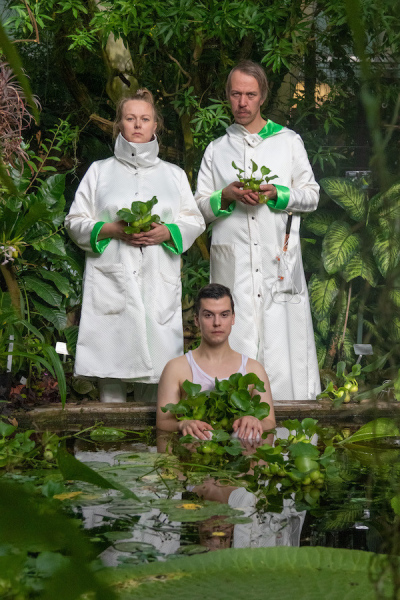
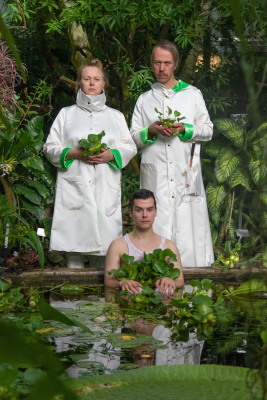
Fern Orchestra is an Art and Science Collective that has studied subjects such as photosynthesis, closed biosphere and plant neurology in their works. Works are characterized by the presence of living organisms other than humans
-
Robin Jonsson (SE)
-
Anne Cecilie Lie (NO)
-
Aga Pokrywka (FI/PL)
-
Jacob Kirkegaard (DK)
-
Voldemārs Johansons (LV)
-
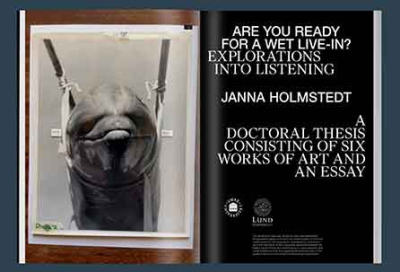
Janna Holmstedt (SE)
-
Jana Winderen (NO)
-
Jenna Sutela (FI/DE)
-
Krzysztof Topolski (PL)
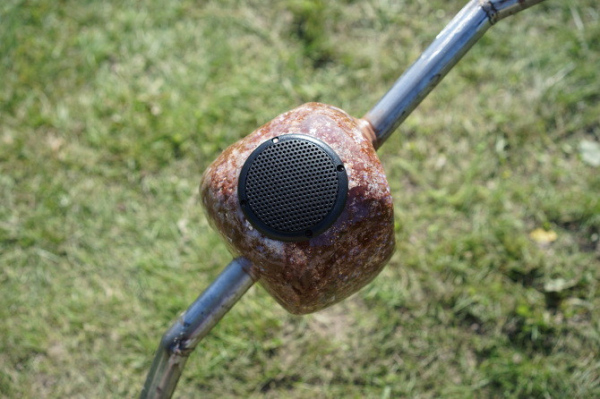
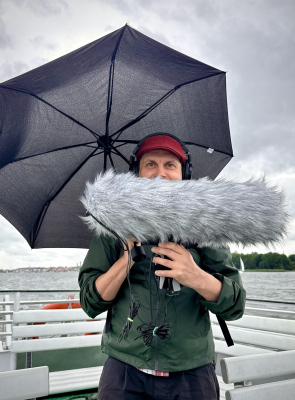
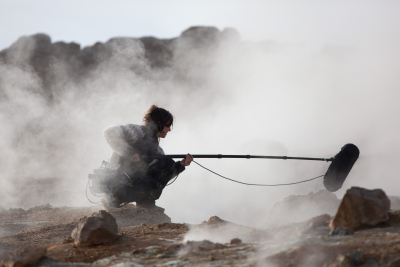
Sound artist, drummer composer, improviser, author of projects in the field of music and art. He focuses on field recording, soundscape and acoustic ecology, creates sound installations. Key concepts in his work are soundscape, noise, vibration and groove. He is interested in explorations in the sphere of percussion and live electronic, improvised and electroacoustic music, composes using a computer, carries out projects devoted to contemporary music, conducts sounds workshops. He was awarded with a scholarship from the Museums Quartier in Vienna and the Ministry of Culture and National Heritage in Poland and City of Gdańsk. He has received a scholarship from the Visegrad Foundation at Galeria Skolska 28 in Prague and the ArtsLink Foundation in New York – a residency at the Ohio State University School of Music in the USA. He has stayed and worked at the EMS electroacoustic music center in Stockholm. Participated in a residency at the Skalar Center for Sound Art and Experimental Music in Seyðisfjörður, Iceland
-
Simon Daniel Tegnander Wenzel (NO)
-
Wauhaus (FI)
-
Sonja Strange (DK)
-
Mariliis Rebane (EE)
Mari-Liis Rebane is a sound artist and visual artist working across experimental sound practices, installation, and visual media. Her work explores the perception of sound as a spatial and material phenomenon, often focusing on the intersections between listening, environment, and embodied experience.
In her practice, sound functions both as subject and medium, shaping environments that invite attentive and slowed-down modes of perception. She is interested in how sonic and visual layers interact, and how subtle acoustic and visual elements can reveal hidden structures within natural and constructed landscapes.
Rebane’s work often engages with field recordings, spatial sound composition, and site-responsive installation formats. By translating ecological and atmospheric processes into auditory and visual experiences, she creates works that reflect on human and non-human entanglements, memory, and the shifting boundaries between inner and outer landscapes.
Through her interdisciplinary approach, she seeks to expand the ways we perceive and relate to environments, foregrounding listening as a critical and embodied method for understanding contemporary ecological and spatial conditions. -
Nana Franciska Schottländer (DK)
I work cross-aesthetically within the fields of choreography, performance, video and installation using the body as a living instrument for encounters, research and co-creation. The works revolve around encounters and intra-actions between humans and more-than-human bodies and worlds including rocks, fungi and plants, wind, waters and tides, soil types and larger geographical areas.
Since 2020 I focus on landscapes shapes by human intervention like extraction, production, waste and infrastructure to explore, what care and reciprocity looks like here. The works employ immersion, co-creation and long duration and draw inspiration from both scientific and academic research to develop embodied knowledge and encounters of reciprocity and co-creation.
My work formats includ performances (both participatory and solo, site specific and in art spaces), sound and video installations, exhibitions, writings and publications.
Previous performances and exhibitions (selection): Metropolis (DK), OIT (NO), Louisiana Museum of Modern Art (DK), Kunsthal Charlottenborg (DK), Roskilde Festival (DK), Heartland Festival (DK), KØS Museum (DK), The Danish National Gallery (DK), Festival of Future Nows / Hamburger Bahnhof (DE), Pergine Festival (IT), Breath Days (IT), Art Center Silkeborg Bad (DK) Liselund (DK), The Tunnelfactory (DK) amongst others. -
Rihards Vītols (LV)
My artistic practice is about relationships between nature, technology, and science. For the first time nature in my works was shown in 2011 in an experimental photography series Recycled Nature. Since then, I have continued to work with these themes related to nature and moved to work directly in nature, not only reflecting on it. I have noticed that my work has sometimes been considered to be about ecology. For me, my work is not about ecology. It is about our relationships with nature, environment, and technology after introducing nature to my work by augmenting some aspects of an environment. This symbiosis allows me to observe what is happening when the environment meets a foreign body. Not only do I use science to support the concept of my works, but also I am trying to use scientific methods to conduct experiments and document and visualize their outcomes of them. I see my role as a mediator between my work and the environment. It is important for me not to interfere with my work, while it is in its designated environment. I am driven by unknown results and wish to find something new. At the same time, I am enjoying the process of my experiments while performing them. -
-
LAND BEFORE TIME (SE)
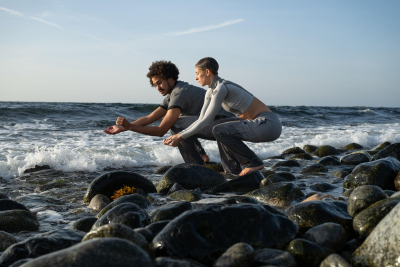
Land Before Time is an artistic partnership from Sweden, formed by Joanna Holewa Chrona and Yared Tilahun Cederlund. Blending dance, deejaying, choreography, and sound composition, their work explores rhythm, connection, and the spaces between movement and music. Rooted in both local and global influences, they create performances that merge streetdance traditions with experimental sound and improvisation. Land Before Time’s piece Waterkind was selected by Aerowaves as part of the Twenty25 Artists, and presented at the Spring Forward Festival 2025. By drawing inspiration from the properties of water, the company encourages a deeper awareness of interdependence, between people, nature, and community, highlighting water as both a physical and spiritual connector that sustains all forms of life. -
WunschMachine (DK)
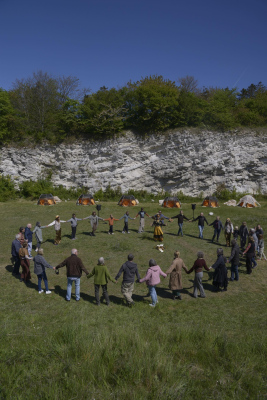
WunschMachine is a Denmark-based performing arts company creating site-specific, sensory works rooted in landscape, local communities, and lived experience. Working at the intersection of performance, dramaturgy, physical theatre, anthropology, and ritual, we develop artistic encounters that unfold beyond traditional theatre spaces—in gardens, cemeteries, quarries, villages, and public landscapes. Our practice is grounded in deep research into specific places and their human and more-than-human inhabitants. Through participatory performances, walks, installations, and community-based projects, we explore how art can strengthen relationships between people, place, memory, and ecology. Local citizens, choirs, children, and community groups often become active collaborators in shaping the works. Based in rural South Zealand, WunschMachine is committed to creating accessible yet experimental performance—what we call a “popular avant-garde.” Our work invites audiences to experience landscapes not as backgrounds, but as active agents, fostering embodied attention, ecological awareness, and new forms of collective imagination.