-
Aurelija Maknytė (LT)
-
Katrīna Neiburga (LV)
-
Saulė Noreikaitė (LT)
-
Diana Lelonek (PL)
-
Rasa Šmite & Raitis Šmits (LV)
-
Tuomas A. Laitinen(FI)
-
Åsa Cederqvist (SE)
-
Ingela Ihrman (SE)
-
Sanna Kannisto (FI)
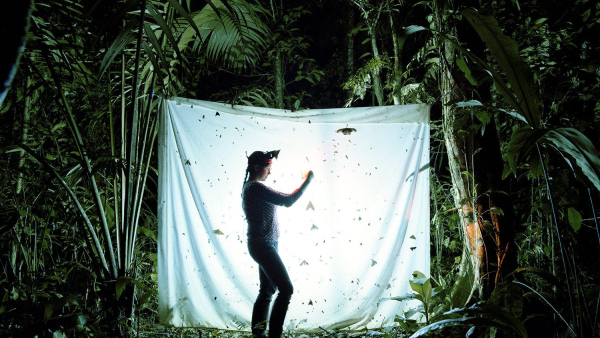
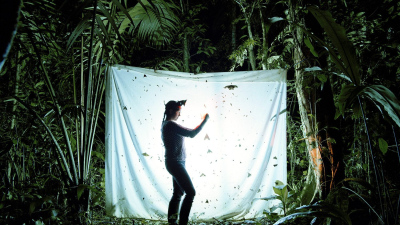
Sanna Kannisto graduated from the Aalto University in 2002. Her work merges personal narrative with photography’s documentary tradition, exploring the intersection of science and art. Through her lens, she examines both natural phenomena and her own role as observer and interpreter.
Kannisto has worked in rainforests South America and lately ornithological stations across Finland and Europe. Her carefully staged images, influenced by scientific illustration and still life, depict rarely seen species with theatrical precision—highlighting both the beauty of nature and the artifice of presentation. A key element of her practice is close collaboration with scientists and researchers.
-
Maria Nurmela (FI)
-
Marika Hedemyr (SE)
Marika Hedemyr is a Swedish choreographer, artist, and artistic researcher working with public art, choreography, and mixed reality. She is a pioneer in Sweden of site-specific augmented and mixed reality performances in public space. Her work explores coexistence through emotional and political relationships between people and places. Her site-specific mixed reality walks combine documentary material, augmented reality technology, and performative formats. Between 2024 and 2030, she is developing a series of performances exploring coexistence with planet Earth through the elements earth, water, fire, and air, as immersive experiences that open new perspectives on relations in the landscape. She also engages in artistic research and regularly publishes on artistic practice and the role of art in society.
-
Voldemārs Johansons (LV)
-
Aistė Ambrazevičiūtė (LT)
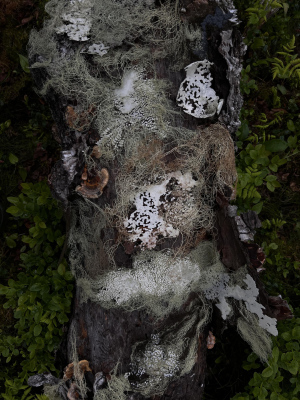
Aistė Ambrazevičiūtė is a digital artist and experimental architect based in Kaunas, Lithuania. Her interdisciplinary practice explores the intersection of digital and natural realities, creating innovative visualizations that uncover the intricate- and often invisible- relationships between environments, textures, and forms. Her work emphasizes sustainability and the symbiosis between human-made and ecological systems. In December 2024, Ambrazevičiūtė defended her practice-based PhD at the Vilnius Academy of Arts with a research project titled Lichen Grammar, investigating the spatial and material relationships between lichen growth forms and their habitats. Her ongoing artistic research develops architectonic surfaces inspired by diverse microecologies, furthering her interest in the multisensory and textural dimensions of natural environments.
-
Jenna Sutela (FI/DE)
-
Thomas Seest (DK)
Thomas Seest has been working with landscapes and natural materials. At Vild Park in the municipal Guldborgsund he has worked in collective formats and collaborations. He holds a PDC in permaculture and insists on regenerating nature and culture through his works - Art can make the sun rise and the earth quake.
-
Krista Burāne (LV)
Krista Burāne, a visionary artist from Latvia, transcends the boundaries of creative expression. Born in 1971, she dons many hats – a theatre and film director, an editor, a playwright, a scriptwriter and an interdisciplinary artmaker. A true believer in art's capacity to ignite new perspectives, her creations challenge senses and provoke deep reflection. Krista Burāne fosters a space for dialogue not just between humans but also between humans and other beings. As an advocate for documentary, participatory and site-specific theatrical formats, Krista passionately believes in the capacity of art not only to engage viewers intellectually and emotionally but also to involve them physically and actively. Her works have travelled to many international festivals and have been nominated and awarded multiple times for national theatre and cinema awards in Latvia.
-
Fern Orchestra (FI)
-
Åsa Elzén (SE)
-
Wauhaus (FI)
-
Simon Daniel Tegnander Wenzel (NO)
-
Robin Jonsson (SE)
-
Eija-Liisa Ahtila (FI)
-
Rihards Vītols (LV)
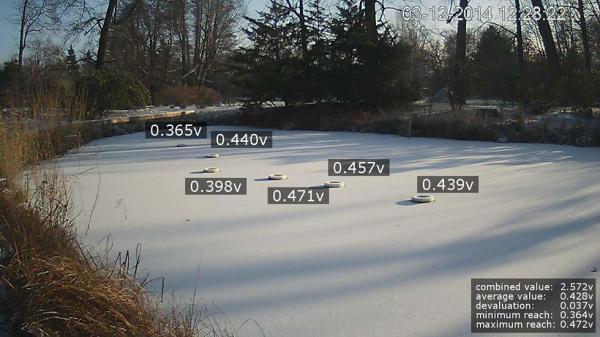
My artistic practice is about relationships between nature, technology, and science. For the first time nature in my works was shown in 2011 in an experimental photography series Recycled Nature. Since then, I have continued to work with these themes related to nature and moved to work directly in nature, not only reflecting on it. I have noticed that my work has sometimes been considered to be about ecology. For me, my work is not about ecology. It is about our relationships with nature, environment, and technology after introducing nature to my work by augmenting some aspects of an environment. This symbiosis allows me to observe what is happening when the environment meets a foreign body. Not only do I use science to support the concept of my works, but also I am trying to use scientific methods to conduct experiments and document and visualize their outcomes of them. I see my role as a mediator between my work and the environment. It is important for me not to interfere with my work, while it is in its designated environment. I am driven by unknown results and wish to find something new. At the same time, I am enjoying the process of my experiments while performing them. -
Peter Dean (NO)
-
Nana Franciska Schottländer (DK)
I work cross-aesthetically within the fields of choreography, performance, video and installation using the body as a living instrument for encounters, research and co-creation. The works revolve around encounters and intra-actions between humans and more-than-human bodies and worlds including rocks, fungi and plants, wind, waters and tides, soil types and larger geographical areas.
Since 2020 I focus on landscapes shapes by human intervention like extraction, production, waste and infrastructure to explore, what care and reciprocity looks like here. The works employ immersion, co-creation and long duration and draw inspiration from both scientific and academic research to develop embodied knowledge and encounters of reciprocity and co-creation.
My work formats includ performances (both participatory and solo, site specific and in art spaces), sound and video installations, exhibitions, writings and publications.
Previous performances and exhibitions (selection): Metropolis (DK), OIT (NO), Louisiana Museum of Modern Art (DK), Kunsthal Charlottenborg (DK), Roskilde Festival (DK), Heartland Festival (DK), KØS Museum (DK), The Danish National Gallery (DK), Festival of Future Nows / Hamburger Bahnhof (DE), Pergine Festival (IT), Breath Days (IT), Art Center Silkeborg Bad (DK) Liselund (DK), The Tunnelfactory (DK) amongst others. -
Georg Jagunov (BY/DK)
Georg Jagunov (b. 1984) is a Danish-Belarusian visual artist based in Copenhagen. He graduated from the Royal Danish Academy of Fine Arts in 2011 and works across installation, sculpture, digital animation, sound, projection, and performance.
His practice moves at the intersection of nature, geology, and the human imagination. Through sensory and spatial formats, he explores deep time, geological processes, cultural heritage, and the hidden narratives of materials. Drawing on organic and geological structures, he creates works that connect the microscopic with the landscape, and the material with the mythological.
In recent years, he has worked particularly with moss, flint, water, afforestation, and ancient landscapes across different scales and contexts. Jagunov frequently develops interdisciplinary projects with architects, researchers, educators, and cultural institutions.
-
Sinna Virtanen (FI)
Sinna Virtanen is a writer, director, and multidisciplinary artist based in Helsinki. She creates performances, writes plays, and develops multimedia installations. She is particularly interested in expanding the understanding of what theatre can be and in exploring its possibilities beyond established forms. Her works play with notions of time and space, liminal spaces, reaching into the past and the future, and different forms of afterlife. Working across scales and contexts is central to her practice. Virtanen works reach toward the predramatic where weather conditions, natural forces, and more-than-human beings strongly shape both the reality of the performance and the experience of it.