-
-
Anthropogenic Soils, University of Oslo (NO)
-
Uppsala University Graduate School in Sustainability Studies (GRASS) fellow programme with Baltic Art Center (BAC)
-
UiT The Arctic University of Norway – Worlding Northern Art (NO)
-
THE POSTHUMANITIES HUBS (SE)
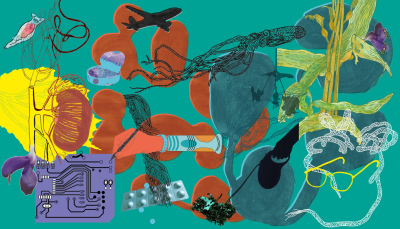
The Posthumanities Hub, founded in 2008 by Cecilia Åsberg at Linköping University, is an evolving research centre where ecology and landscape are understood as entangled naturecultures. It operates as a “platform of platforms” and a “network of networks,” bridging arts, sciences and societal actors through collaborative, more-than-human inquiry.
From early outreach and interdisciplinary events to international programmes like the Seed Box, the Swedish environmental humanities initative, the Hub has been a key starting point for environmental humanities in Sweden, cultivating ecological thinking, multispecies relations, and experimental knowledge-making.
As an online and physical collaboratory, hosting scholars, artistis and grant projects, it enables research creation across borders, connecting scholars, landscapes, and communities in shared efforts to rethink life, environments and futures.
-
University of Stavanger – The Greenhouse Centre for Environmental Humanities (SE)
-
Inter Arts Center, Lund University (SE)
-
Estonian Academy of Music and Theatre - MA in Contemporary Physical Performance Making (CPPM)
-
Centre for the Social Study of Microbes, University of Helsinki (FI)
-
Tre Tre Tre (NO)
-
Paviljong (NO)
-
Nida Art Colony of Vilnius Academy of Arts (LT)
Nida Art Colony of Vilnius Academy of Arts is a residency, education and contemporary art centre located on the Curonian Spit, a UNESCO World Heritage landscape between the Baltic Sea and the Curonian Lagoon. Its programme brings together artists, researchers, students and cultural practitioners working across visual arts, performance, sound, moving image, writing, socially engaged practices and artistic research. NAC’s activities are deeply shaped by its specific environment: dunes, forests, winds, waters, borders, seasonal rhythms, ecological vulnerability and layered local histories. Through residencies, exhibitions, workshops, public events and research-based projects, NAC supports artistic practices that engage with the landscape as a complex field of relations between (more-than-)humans, technology, geopolitics, and ecology.