-
-
Neringa Forest Architecture (LT)
Neringa Forest Architecture (Jurga Daubaraite, Egija Inzule and Jonas Žukauskas) is an architecture, art, and research collective focused on the agency of cultural practices in framing environmental relationships and enhancing ways of sensing and understanding forest. NFA involves a growing assembly of collaborators and participants to read forest as constructed space – an environment of natural systems governed, exploited, and regulated by human interventions, technologies, industries, institutions and agencies. The collective works through transdisciplinary engagements with diverse partners, developing site-specific work that takes form in publishing, exhibitions, film, educational programmes, and other context-specific formats.
The collective has its starting point in the Curonian Spit, a sand dune that separates the lagoon from the Baltic Sea, where afforestation formed a constructed cultural landscape containing the aeolian processes of wind-blown sands. Developing a project at Nida Art Colony of Vilnius Academy of Arts in 2020, NFA established a process to redirect timber cut in the forests of the Curonian Spit, a protected cultural landscape of afforested sand dunes, from biofuel processing to construct a Timber Archive and Library. This archive is both: a material storage facility and a material document of the environmental forces and processes shaping the forest landscape in this unique site. Building on this resource, NFA initiated an artistic research residency programme, inviting artists, architects, filmmakers, researchers and geographers to develop their inquiries into the multiple directions of intersectional research that the forest enables.
NFA leads a COOP study group at the Dutch Art Institute, runs Kirvarpa Books, and since 2020 has curated a residency programme at Nida Art Colony of Vilnius Academy of Arts in Lithuania. In 2023, NFA designed, curated and produced the Children’s Forest Pavilion, Lithuania, for the Venice Architecture Biennale. As part of the Season of Lithuania in France 2024, NFA carried out research beyond the Curonian Spit for an exhibition at arc en rêve in Bordeaux, presenting a playscape installation devoted to the many histories, practices and processes that have shaped and continue to shape the Landes forests in the Nouvelle-Aquitaine region.
NFA projects are conceived with long-term and multiple lives in mind. Following its presentation in Venice, the Children’s Forest Pavilion branched into two distinct sites. The roof structure is now installed in the old-growth forest in Juodkrantė, where it functions as the Neringa Forest Classroom, a destination for forest walks and environmental education workshops. The play platforms, shadow play projections and other elements are installed at the Education Space of the Stasys Museum, supporting its research and learning activities led by the pavilion’s contributors together with the museum team.
-
HOW (NO)
-
SKIFTE LAND (SE)
-
Matskogen på Landås (NO)
-
Sympoietic Society (EU)
-
Hunter-gatherers (FI)
-
Wildbits (EE)
Wild Bits is a technological art outdoor exhibition triennial that explores the intersections of art, technology, ecology, and landscape. Taking place in diverse natural and rural environment of Southern Estonia, it presents site-specific works that engage directly with local ecosystems, environmental processes, and the evolving relationship between humans and the more-than-human world.
Bringing together artists, researchers, and practitioners across disciplines, Wild Bits enables critical reflection on how technological and ecological transformations reshape our perception of place and landscape. The programme highlights artistic practices that respond to environmental change, multispecies coexistence, and shifting cultural understandings of nature.
Beyond its main edition, Wild Bits operates as a travelling and adaptable platform. It is actively seeking partners and co-commissioners and develops satellite exhibitions that travel across Europe in collaboration with local host institutions and umbrella organisations. These nomadic iterations allow the project to take different forms in dialogue with new contexts and landscapes. So far Wild Bits satellites have been exhibited in the Baltics and in Northern Finland.
By situating contemporary art outside conventional gallery spaces, Wild Bits invites audiences into immersive encounters with landscape and process, creating space for experimentation, exchange, and shared reflection on ecological futures. -
Luster Mikromakeri (NO)
-
Seiko (LT)
-
THE POSTHUMANITIES HUB (SE)
The Posthumanities Hub, founded in 2008 by Cecilia Åsberg at Linköping University, is an evolving research centre where ecology and landscape are understood as entangled naturecultures. It operates as a “platform of platforms” and a “network of networks,” bridging arts, sciences and societal actors through collaborative, more-than-human inquiry.
From early outreach and interdisciplinary events to international programmes like the Seed Box, the Swedish environmental humanities initative, the Hub has been a key starting point for environmental humanities in Sweden, cultivating ecological thinking, multispecies relations, and experimental knowledge-making.
As an online and physical collaboratory, hosting scholars, artistis and grant projects, it enables research creation across borders, connecting scholars, landscapes, and communities in shared efforts to rethink life, environments and futures.
-
Nida Art Colony of Vilnius Academy of Arts (LT)
Nida Art Colony of Vilnius Academy of Arts is a residency, education and contemporary art centre located on the Curonian Spit, a UNESCO World Heritage landscape between the Baltic Sea and the Curonian Lagoon. Its programme brings together artists, researchers, students and cultural practitioners working across visual arts, performance, sound, moving image, writing, socially engaged practices and artistic research. NAC’s activities are deeply shaped by its specific environment: dunes, forests, winds, waters, borders, seasonal rhythms, ecological vulnerability and layered local histories. Through residencies, exhibitions, workshops, public events and research-based projects, NAC supports artistic practices that engage with the landscape as a complex field of relations between (more-than-)humans, technology, geopolitics, and ecology.
-
Paviljong (NO)
-
Kintai Arts (LT)
Kintai Arts is a non-profit organisation and art residency, located in the rural environment on the coast of the Curonian Lagoon near the peninsula of Curonian Spit and Vente Cape.
Its main mission is to actualize, develop and explore the unique tangible and intangible cultural and natural heritage of the Pomeranian region and to foster creativity, reflection and exchange of ideas in the spheres of contemporary art and contemporary music and interdisciplinary art practices.
As an international art residency, Kintai Arts aims to develop interdisciplinary artistic practice and the exchange of knowledge and ideas in the fields of art and science, nature and ecology, historical and cultural in situ heritage. Curated residency programmes are developed around site-specific research rooted in the local landscape, encouraging critical engagement with the region’s fragile ecology and natural heritage. The landscape and ecology related topics act as a central protagonists across both visual and sound-based residency programmes.
-
Elektron.art (EE)
-
SISTERS HOPE (DK)
Sisters Hope is a Copenhagen-based performance group and movement spearheading a whole new way of performance artwork. Their work unfolds at the intersection of immersion, intervention, activism, research and pedagogy. In their large-scale durational performance pieces they explore different aspects of what they call a Sensuous Society – A potential new world arising from the post-economical and ecological crisis. In their perennial performance, they have introduced a whole new artistic paradigm that they term ‘Inhabitation’ stimulating ecologic connectedness and sustainable futures. Core to Sisters Hope’s practice is what they call ‘the Poetic Self’, an inner inherent poetic potential that shapes both our inner and outer landscape. Through the Poetic Self and various formats Sisters Hope explores the potential of the sensuous across landscapes, cities, continents and unfolds what connects us as humans through sensuous and poetic encounters.
-
BIRCA (DK)
BIRCA is a laboratory for the new ecological performing arts, located in the middle of nature and fields on the island of Bornholm.
Here artists gets the opportunity to research and develop their ideas and projects, while we actively support investigative and co-creative approaches to the artistic processes through discussion and facilitation. This study is carried out in close dialogue with the surrounding community and with an eye to the local identity and nature on Bornholm. By embracing BIRCA’s natural surroundings, we want to create a vision for an ecological future that allows for connectedness, generosity and curiosity. We work in depth with creative processes, and we address the dynamic connection between the ecological systems of the environment, the social and the mental.
BIRCA focuses on how the performing arts can act in relation to the climate and biodiversity crisis we find ourselves in. We work to create and support a radical new performing arts that takes on an active and interactive role in relation to the ecological challenges of world society, and who, through strong artistic expressions and interventions, contribute to creating visions for a future where we can live in harmony with the nature we are part of. It is a performance art that is created with a limited negative impact on the world’s nature and with care for all species and life forms on the planet. The artists who apply for residencies at BIRCA are concerned with investigating the living conditions of the species and are focused on creating universal well-being. They do this through an organic, sensuous and sensorially present stage art, which must create a deeper resonance in those who encounter it.
BIRCA is created and led by the international producer and innovator Susanne Danig, who uses her extensive international experience to create frameworks and facilitate artistic processes at BIRCA.

-
Bioart Society (FI)
Bioart Society is a Helsinki-based association working at the intersection of art, science and society. Established in 2008 at the Kilpisjärvi Biological Station in Gilbbesjávri, the association has close to 200 members in Finland and other countries, and participates in global networks of art & science across biology, ecology and the life sciences. Bioart Society supports artistic and transdisciplinary work through workshops, residencies, long-term collaborative projects and public dialogue on how biosciences and biotechnology shape the social, political and ethical dimensions of life. Amongst other multi-year partnership projects, ongoing collaborations include Ars Bioarctica, an art & science residency programme with a focus on the sub-arctic environment with the Kilpisjärvi Biological Station, University of Helsinki, in Sápmi and the Tokyo Art & Science Research residency with the BioClub Tokyo and The Finnish Institute in Japan.
-
§112 Fredrikstad (NO)
§112 Fredrikstad develops artistic and cultural projects that explore the relationship between people, place, democracy, ecology and the public realm. Through site-specific projects, public programmes and collaborations, we use art as a tool for dialogue, reflection and engagement with environmental and societal challenges.
-
Kjerringøy Art Base Camp (NO)
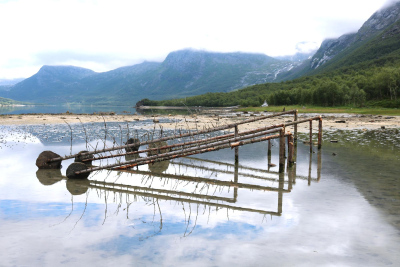
K-LAB is an artist-run, international, interdisciplinary, and site-specific platform for land art, established by Ane Øverås in 2007. The Biennale takes place in Nevelsfjord, Kjerringøy in Northern Norway, above the Arctic Circle, 67°49’ N and 14º 89’ E. Now we are working to become an artist residence, AiR Kjerringøy, during the school year with workshops for producing and conveying art. https://www.kjerringoylandart.com/air-kjerringoslashy.html
-
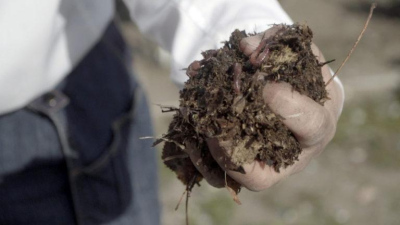
HUMUS ECONOMICUS (SE)
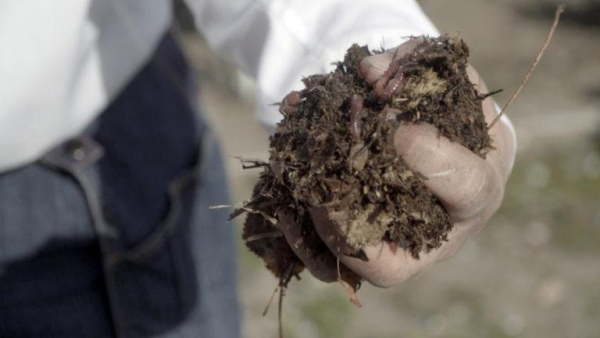
Humus Economicus is an art and research initiative exploring the value and future of soil in urbanized landscapes. It operates at the intersection of critical heritage studies, urban studies, and artistic research and practice in the transdisciplinary field of environmental humanities. It seeks to draw attention to radically altered human-soil relations, the invisible work of soils, and practices of soil care in a time when soils are sealed and degraded at rapid rates. The relational approach we seek to cultivate is sensitive to place-based practices, cultures of care, and multispecies conviviality. The research team consisted of six artists and researchers and was led by Dr Janna Holmstedt (National Historical Museums, Sweden, 2021-2025). Funded by Formas – a Swedish Research Council for Sustainable Development (DNR 2020-01062). Though the project has been concluded, the networks, experiences, and topics are fully alive and kicking, seeding new beginnings in other contexts. Team: Christina Fredengren, Janna Holmstedt, Jenny Lindblad, Malin Lobell, Karin Wegsjö, Cecilia Åsberg.